00 Flour vs All-Purpose for Pizza Dough
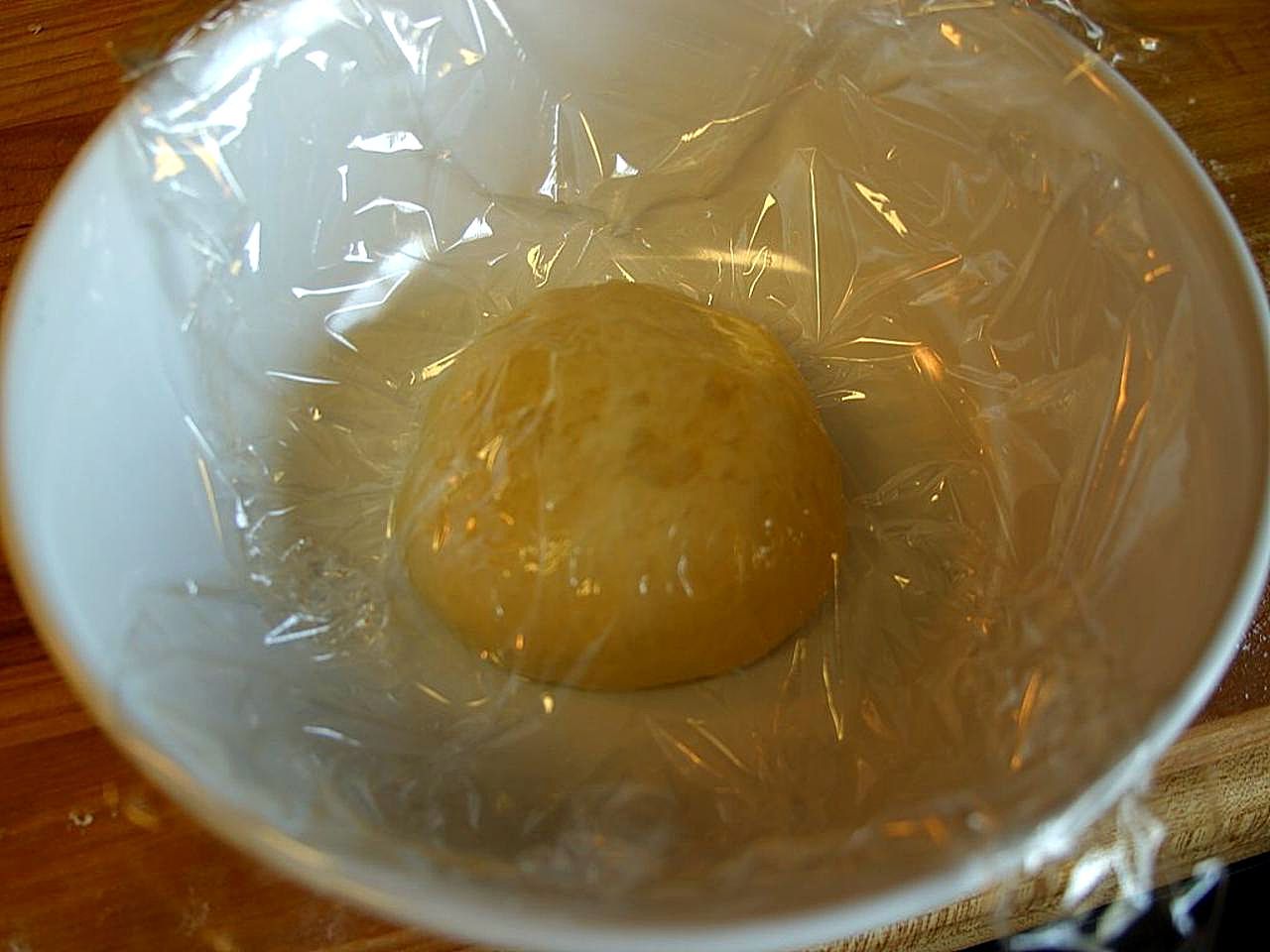
Photo: Jon Sullivan, public domain
The short answer
00 is a milling grade, not a protein level. It describes how finely the flour is sifted and how much bran is left in: 00 is the finest, whitest grade in the Italian system, with very little ash. It says nothing about strength, and two bags both labelled 00 can have 9% and 13% protein.
All-purpose flour is an American category defined by protein, usually 10% to 11.5%. So the honest comparison is not 00 against all-purpose, it is the specific 00 you bought against the specific all-purpose you have, and you can only tell by reading the protein and the W value on the back of the bag.
What each one actually is
| Tipo 00 | All-purpose | |
|---|---|---|
| Defined by | Milling fineness (ash content) | Protein content |
| Protein | 9% to 13%, varies by brand | 10% to 11.5% |
| Absorption | High for its protein, the fine grind hydrates fast | Moderate |
| Extensibility | Very high, stretches without tearing | Moderate |
| Best oven | 400 °C and up | 250 to 300 °C |
| Where it wins | Neapolitan, long cold ferments | Home oven, pan pizza, same-day dough |
Why 00 behaves the way it does
The fine grind is the whole story. Because the particles are small, water reaches them quickly: a 00 dough hydrates fully in 20 minutes where a coarser flour wants an hour. Fully hydrated gluten is extensible gluten, which is why 00 stretches into a paper-thin base without fighting back, and why it is the flour behind a Neapolitan rim.
The same fineness has a cost. 00 is a weak-to-medium flour for its protein level, and it is designed to be baked at 400 °C in 60 to 90 seconds. In a 260 °C home oven the same dough bakes for 7 to 9 minutes and the crust comes out pale and soft, because 00 has been milled to brown slowly. That is not a defect, it is the flour doing what it was made for.
When all-purpose is the better choice
- Home oven at 250 to 290 °C. All-purpose browns at the temperature you actually have.
- Same-day dough. AP is more forgiving of a short ferment and a heavy hand.
- Pan pizza and Detroit style. You want a firmer, chewier crumb, not an airy rim.
- You cannot buy 00 locally. A 12% protein bread flour gets you closer to 00 strength than AP does.
Where 00 really pays off is a long cold ferment in a hot oven. The cold ferment guide covers the timing, and that is the combination where the difference is not subtle.
Swapping one for the other
The numbers that matter when you substitute:
| Swapping | Change the water | Why |
|---|---|---|
| 00 to all-purpose | −2% to −3% | AP absorbs less, so the same water gives a wetter dough |
| All-purpose to 00 | +2% to +3% | 00 takes more water for the same feel |
| All-purpose to bread flour | +2% | Higher protein needs more water to hydrate |
| 00 to bread flour | ±0 | Similar absorption, different feel |
Use the hydration calculator to turn a percentage into grams, and if the recipe you are converting is written in cups, the grams to cups converter has the per-flour figures: 00 is about 127 g per cup, all-purpose 125 g.
The W value, in one paragraph
Italian 00 bags often print a W number alongside the protein. W measures dough strength, meaning how much energy the dough can take before it tears. W 160 to 180 is a weak flour for short ferments and biscuits. W 220 to 240 suits a 24-hour dough. W 260 to 300 handles 48 to 72 hours at room temperature or a long cold ferment. Most supermarket pizza flour sits around W 260 to 280, which is why it tolerates a two-day fridge ferment where all-purpose often does not.
If your bag has no W value, which is most American bags, use protein as a rough proxy: under 11% treat it as a 24-hour flour, 12% to 13% as a 48-hour flour, and above 13.5% as a bread flour that will want more water and more kneading.
Signs you bought the wrong one
- The dough tears when you stretch it and springs back hard. Too strong for the ferment length. Shorten the ferment or switch to a weaker flour.
- The base is pale after 8 minutes at full heat. You are baking 00 at home-oven temperature. Raise the heat, add 1% diastatic malt, or switch to bread flour.
- The dough spreads flat within an hour. Too weak, or the protein is too low for the hydration. Drop the water 3% and see if it holds.
- The crumb is tight and bready instead of open. Usually over-kneaded or under-fermented rather than a flour problem, but bread flour makes both mistakes more visible.
Questions
Is 00 flour better than all-purpose for pizza?
Only if you have the oven for it. In a 400 °C wood oven 00 is in a different league. In a 260 °C home oven it produces a paler, softer crust than bread flour, and plenty of people prefer what they get from AP.
Can I mix them?
Yes, and it is a practical way to use up a bag. Half 00 and half bread flour gives roughly W 280 strength with browning in the middle. Adjust water up 1% from the all-purpose figure.
Is 00 flour gluten-free?
No. It is wheat flour, finely milled. The 00 refers to the sifting, not to the absence of gluten.
Why does my 00 dough feel wetter than the recipe says?
Either the flour is fresher than the recipe assumed, or you are comparing it with an AP dough at the same percentage. 00 at 62% feels like all-purpose at 65%. Do not add flour. Wait 30 minutes and let the flour finish hydrating before you judge it.
Does 00 go off?
It goes stale before it goes bad. White flour keeps 6 to 12 months in a sealed container. Whole wheat and stone-ground flours go rancid in 3 to 4 months because of the oils in the germ. If it smells of crayons, it has turned.
Related
Work out the batch with the pizza dough calculator, see what the water percentage does to the crust with the hydration calculator, and if you are switching flours mid-recipe, baker's percentage is how you keep the salt and yeast in proportion.
