Poolish and Biga: How Much Pre-Ferment to Use
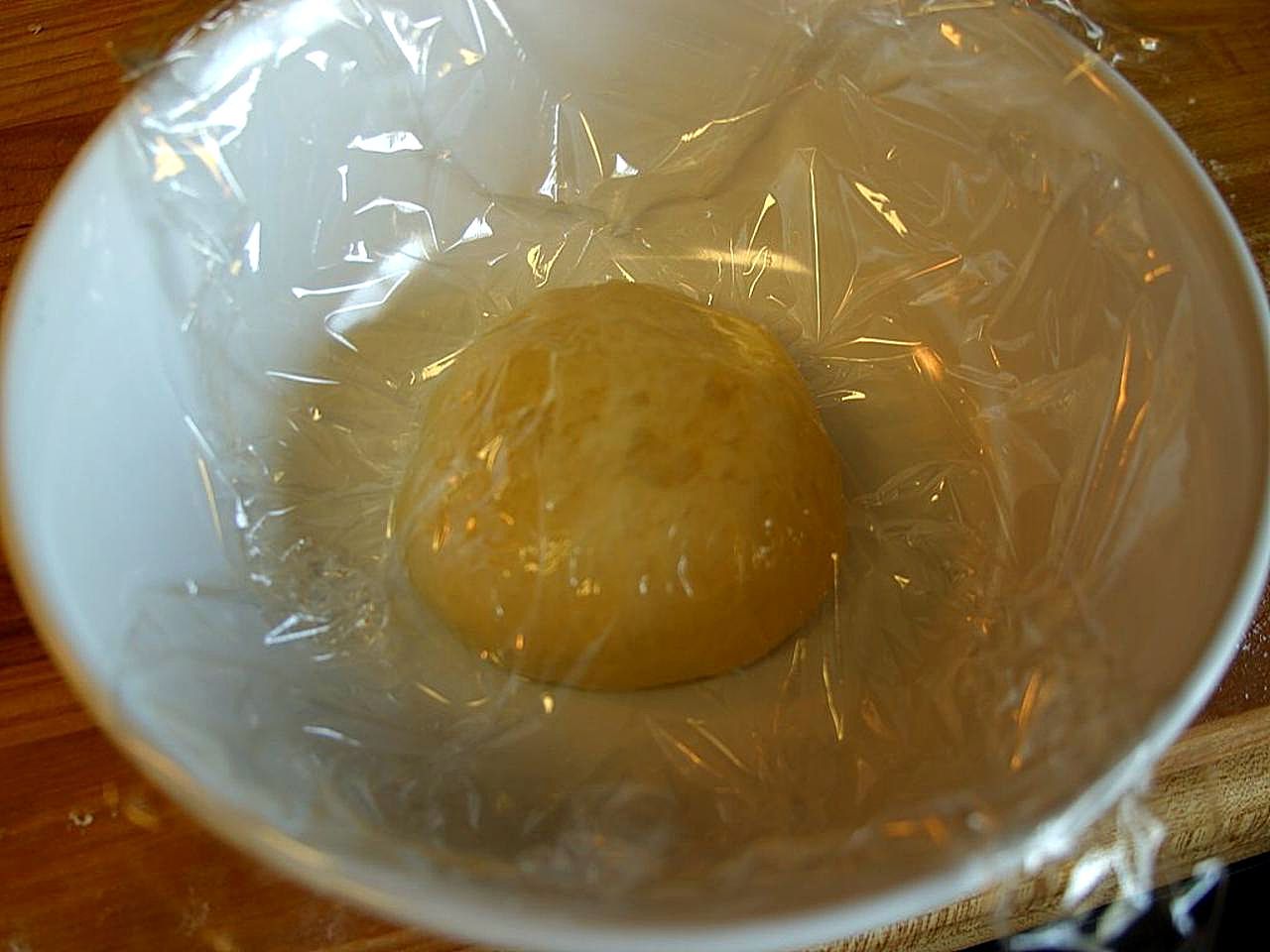
Photo: Jon Sullivan, public domain
What a pre-ferment actually is
A poolish or a biga is a portion of the flour and water fermented ahead of the main mix. Instead of all the flour going in at once, you hold part of it back, add a pinch of yeast and let it work for half a day. The rest of the batch is mixed the next morning.
The two names describe two wetnesses, not two techniques:
- Poolish is 100% hydration: the flour and water weigh the same. It is a batter, it bubbles hard and it comes from Polish baking by way of France.
- Biga is stiff: 50% to 55% hydration, so it looks like crumbly dough rather than a batter. It is the Italian version and it is what most Neapolitan doughs use.
Either way, the total flour and total water in the finished dough are unchanged. You are only moving them around in time.
How much of the flour to move
Rule of thumb: 20% to 40% of the total flour goes into the pre-ferment. 30% is a good first try. Above 40% the dough gets extensible enough to be hard to handle; below 20% you will barely taste the difference.
Take a 1,000 g batch at 62% hydration with 2.5% salt. That works out to 608 g of flour, 377 g of water and 15 g of salt. Here is how it splits:
| Pre-ferment share | Flour in the poolish | Water in the poolish | Flour left for the mix | Water left for the mix |
|---|---|---|---|---|
| 20% | 122 g | 122 g | 486 g | 255 g |
| 30% | 182 g | 182 g | 426 g | 195 g |
| 40% | 243 g | 243 g | 365 g | 134 g |
For a biga, keep the flour share and drop the water: a 30% biga at 50% hydration is 182 g of flour and 91 g of water, and the remaining water moves back into the main mix.
How much yeast goes in the pre-ferment
The mistake people make is adding the full yeast dose twice. There is one yeast budget for the whole batch.
At a 48-hour cold ferment the batch wants 0.25% instant dry yeast against the flour, which is 1.5 g for 608 g of flour. Split it: about a fifth into the poolish (0.3 g) and the rest (1.2 g) into the main mix. If you are weighing 0.3 g, a level eighth of a teaspoon is close enough.
A poolish at 20 °C is ready in 12 to 16 hours. It is done when it has domed and the surface is covered in bubbles; if it has sunk back and smells sharp, it is past its peak.
Why bother
A pre-ferment buys you three things the straight mix cannot: a longer window of flavour development without the gluten collapsing, a more extensible dough that stretches without tearing, and better browning because more of the flour has already been broken down into sugars.
What it costs is planning. If you want pizza on Saturday evening, the poolish goes in on Friday night.
Three things that go wrong
- Counting the poolish flour twice. The flour in the poolish is part of the batch, not extra. Total flour stays 608 g.
- Putting all the yeast in the poolish. It ferments too fast, peaks overnight and collapses before the morning mix.
- Judging it by the clock only. A warm kitchen takes hours off; a cold one adds them. The dome and the smell are the honest signals.
